Updated: September 2026 · Original: August 2012
Low-fat chocolate has existed in the lab since 2012: researchers at the University of Warwick replaced up to 50 % of the fat with microscopic droplets of fruit juice – and kept the gloss, the snap and the melt. The method has not reached the shelves so far; Mondelēz filed a patent on a similar technique in 2014. Why fat is so hard to replace in chocolate, and which chocolate Schokologo embosses your logo into, is explained below.
The study: fruit juice instead of fat
“We have found a way to maintain all of those things that make chocolate ‘chocolatey’ but with fruit juice instead of fat,” said lead researcher Stefan Bon of the University of Warwick. For this to work without loss of enjoyment, the juice has to take over many jobs: fat is not only the carrier of flavour, it also gives chocolate its appetising look – the glossy surface and the silky texture.
The fat is also responsible for the gentle melt at body temperature. With a technique called a Pickering emulsion, the juice is meant to deliver the same properties. The key is the even distribution of juice droplets only 30 micrometres in size throughout the remaining fatty mass. The British team found a working recipe for white, milk and dark chocolate. The half-fat chocolate tastes noticeably fruity, which could be avoided by replacing the juice with a mixture of water and ascorbic acid, the developers said.
Source: Skelhon, Grossiord, Morgan, Bon: Quiescent water-in-oil Pickering emulsions as a route toward healthier fruit juice infused chocolate confectionary, Journal of Materials Chemistry 2012, 22, 19289 · University of Warwick press release, 13 August 2012 (ScienceDaily) · Mondelēz patent filing 2014 (ConfectioneryNews).
Why fat is so hard to replace in chocolate
Cocoa butter is not just a flavour carrier – it is the scaffolding of chocolate. Five things depend on it:
- Gloss: The crystal structure of tempered cocoa butter makes the surface shine.
- Snap: The clean crack when you break a piece comes from the solid fat.
- Melt: Cocoa butter melts just below body temperature – that is why chocolate melts in the mouth and not in the hand.
- Shape: As it sets, cocoa butter contracts slightly and the bar releases itself from the mould. That is why an embossed logo gets sharp edges.
- Shelf life: Fat binds no water – chocolate keeps for 6 to 18 months without refrigeration.
What this means for logo chocolate
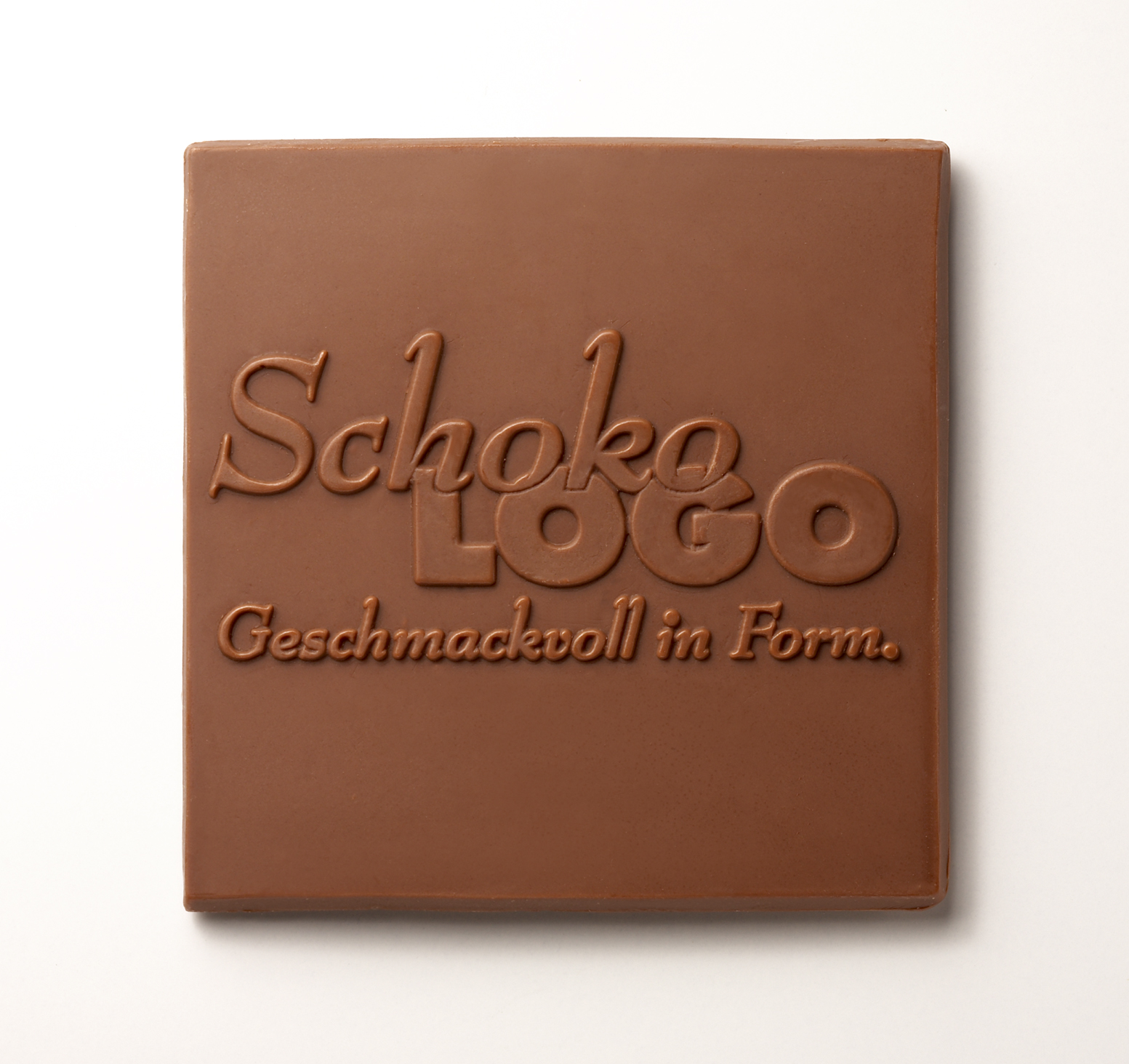
Schokologo embosses logos into Belgian Callebaut couverture – milk, dark (60 %) and white. A fat-reduced mass would neither release cleanly from the embossing mould nor hold the gloss a relief needs; that is why we stay with the classic recipe. If you want less sweetness, choose dark 60 %: the variety with the most cocoa and the least sugar. Sugar-reduced and sugar-free recipes (sweetened with maltitol) are embossed on request; organic, vegan and Fairtrade from about 20 kg.
Which variety suits which logo: logo chocolate · colour instead of relief: printing or embossing? · the smallest shape: chocolate coins with logo.
Low-fat chocolate at a glance
- Study: University of Warwick (Stefan Bon), Journal of Materials Chemistry, August 2012
- Principle: Pickering emulsion – juice droplets of about 30 micrometres, evenly distributed in the remaining mass
- Replaced: up to 50 % of the fat (cocoa butter and milk fat)
- Tested: orange, cranberry and apple juice; alternatively water with vitamin C
- Varieties: milk, dark and white chocolate achieved in the lab
- Side effect: the emulsion is said to prevent fat bloom
- Status today: Mondelēz patent filing 2014; we know of no mass-market product made this way
More news about chocolate?